
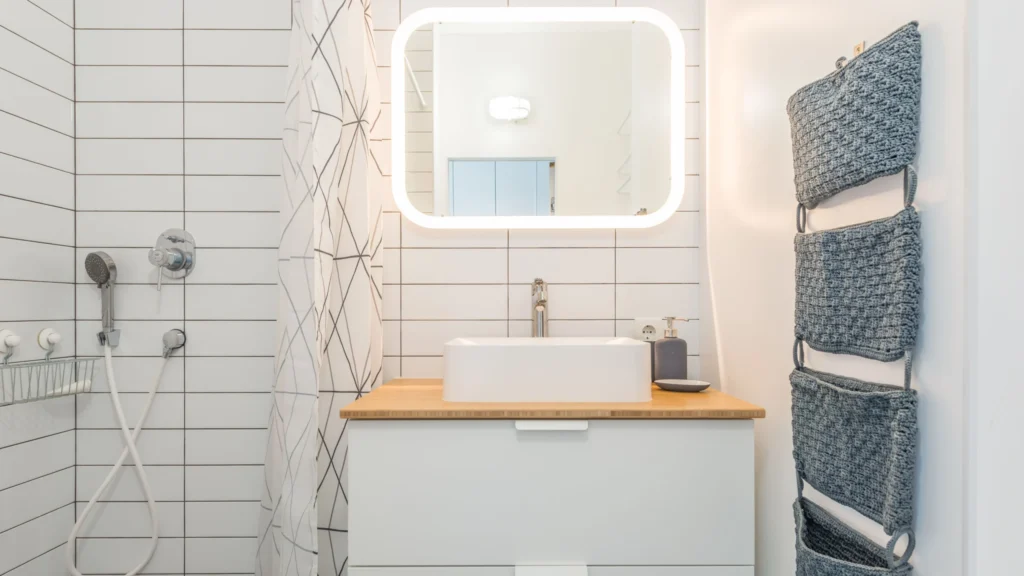
A small bathroom fills up fast. Between daily skincare, hair tools, towels, cleaning supplies, and spare toilet paper, even a tidy room can start to feel crowded. The good news is that you don’t need new cabinets, a bigger floor plan, or a contractor to fix it.
This guide shows you how to organize a small bathroom using simple, low-cost changes: decluttering, smart zones, vertical storage, and a few habits that keep the room dry and easy to clean. Most ideas are renter-friendly and take less than an hour each.
Step 1: Declutter Before You Buy Anything
Organizers can’t fix a bathroom that holds too much. Start by emptying the space.
- Take everything out of the cabinet, drawers, shower, and counter, and put it on a towel or table.
- Sort into three piles: keep, relocate, and throw away.
- Check labels. Toss anything that has changed color, texture, or smell, is leaking, or is clearly past its expiry date. Many cosmetics and skincare products list a “period after opening” symbol (a small open jar) on the packaging.
- Remove duplicates. Keep one open bottle of each product and store the backups elsewhere in the house.
- Wipe every surface before putting items back.
If your bathroom needs a deep clean at the same time, our 10 easy habits for cleaning on a busy schedule can help you keep it tidy afterward.
Step 2: Rethink What Belongs in the Bathroom
Some items fit better elsewhere in the house, and moving them frees up space.
Move your medicines
The classic bathroom medicine cabinet is not ideal for storing medicine. MedlinePlus, a service of the U.S. National Library of Medicine, recommends storing medicine in a cool, dry place, such as a dresser drawer, a shelf, or a closet. It also advises keeping medicine out of reach and out of sight of children, ideally in a cabinet with a child latch or lock. Always follow any storage instructions on the label, since a few medicines need refrigeration.
For unused or expired medicine, don’t flush it unless it appears on the FDA’s list. Check the FDA flush list or ask your pharmacist about take-back options.
Other items to relocate
- Extra toilet paper and bulk toiletries can go in a hallway closet or bedroom shelf.
- Makeup you use only on special occasions can live in a bedroom drawer.
- Cleaning supplies you rarely use can move to a utility closet (keep them out of children’s reach).
Step 3: Create Simple Zones
Zones make a small space easier to use because every item has a clear “home.” Try these:
- Daily zone (sink area): toothbrush, toothpaste, face wash, moisturizer.
- Shower zone: shampoo, conditioner, body wash, razor.
- Hair and grooming zone: brushes, hair ties, styling products, hair tools.
- Backup zone: spare soap, toothpaste, and toilet paper.
- Cleaning zone: a small caddy with a spray cleaner and a cloth.
Keep the daily zone the easiest to reach and the backup zone the hardest.
Step 4: Use Vertical Space
When floor and counter space is limited, go up. These options work well in most small bathrooms:
- Over-the-toilet shelves or a freestanding rack. Place rolled towels, baskets, and a few decorative items here.
- Floating wall shelves. A narrow shelf above the door or beside the mirror can hold baskets or jars.
- Wall hooks. Hang towels, robes, and bags instead of using bulky towel racks.
- Tension rods. A rod inside a cabinet, or in a shower corner, adds a hanging spot for spray bottles or lightweight items.
- Stackable bins. Use them inside cabinets so you can use the full height of the space.
Renter tip: Adhesive hooks and strips are a good no-drill option, but always check the weight limit on the packaging and apply them to clean, dry, smooth surfaces. Wet bathroom walls can weaken some adhesives, so choose products rated for bathrooms.
Step 5: Make the Most of Doors
Doors are often the most underused surface in a small bathroom.
- Over-the-door hooks hold towels or a robe.
- Over-the-door organizers with pockets can store hair tools, toiletries, or cleaning supplies.
- The inside of a cabinet door can hold small hooks, a slim rack, or a cord organizer for hair dryers.
Step 6: Organize Under the Sink
Under-sink space is often a jumble of bottles and tubes. A few changes make a big difference:
- Use clear bins to group items by type (hair, skincare, cleaning, first aid).
- Add a two-tier shelf so you can use the height of the cabinet.
- Put items you use daily at the front.
- Work around the pipes. A curved organizer or two small bins fits better than one large one.
- Place a small tray at the bottom to catch leaks and make wiping easier.
Step 7: Keep the Shower Tidy
Showers get crowded with bottles, which also makes them harder to clean.
- Use a corner caddy or hanging shower organizer, and check that it is rated for the weight of your bottles.
- Buy refillable pump bottles for shampoo, conditioner, and body wash to get a uniform look and fewer bottles.
- Keep only what you use this week in the shower. Store extras outside.
- Hang a hook for a washcloth or loofah so it can dry between uses.
Step 8: Control Counter Clutter
A clear counter makes a tiny bathroom feel larger.
- Use a single tray to group items you need every day.
- Choose wall-mounted dispensers for soap or toothpaste.
- Store toothbrushes in a wall-mounted holder or small cup instead of leaving them loose.
- Keep hair tools in a heat-safe pouch or holder so they don’t take up counter space. Always let them cool completely before storing.
Step 9: Handle Towels Smartly
Towels take up the most room. A few tricks:
- Use one towel per person and give each a hook.
- Roll extra towels and keep them in a basket or on a shelf.
- Hang towels so they can dry fully between uses (see the moisture tips below).
- Keep only a few spares in the bathroom and store the rest in a linen closet.
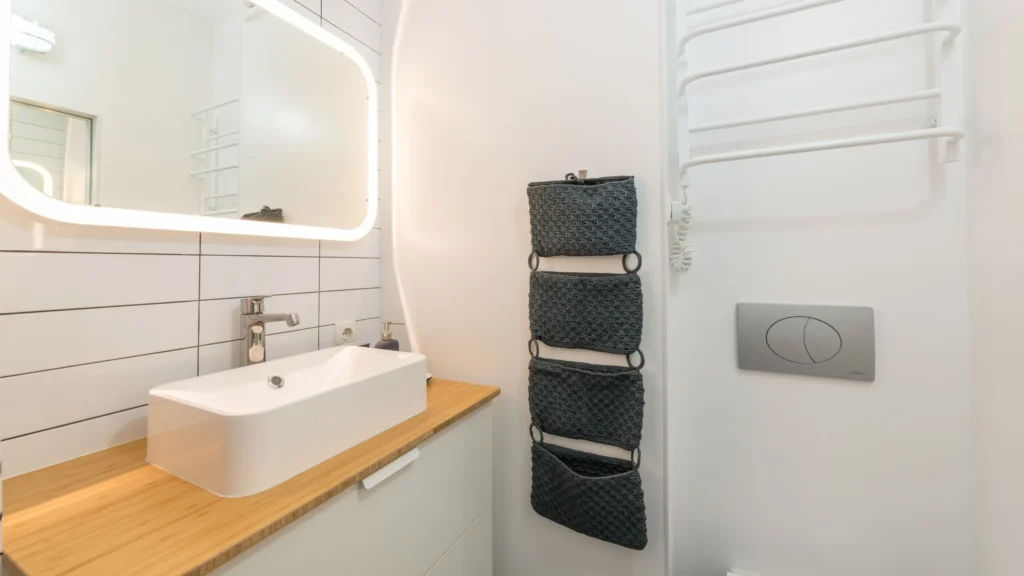
Keep the Bathroom Dry to Keep It Organized
Organization and moisture control go together, because damp storage spaces collect mildew and grime. The U.S. Environmental Protection Agency (EPA) says that the key to mold control is moisture control. Its guide specifically suggests that if mold keeps coming back in the shower or elsewhere in the bathroom, increasing ventilation (running a fan or opening a window) and cleaning more often will usually help.
Simple habits that support this:
- Turn on the exhaust fan or open a window during and after showers.
- Hang towels and bath mats so they dry completely.
- Wipe wet surfaces, and use a squeegee on glass doors and tile if you have one.
- Choose storage with open or ventilated designs (such as wire or slatted baskets) in damp areas.
- Fix leaks quickly, and clean up any visible mold promptly.
If you want to cut down on cleaning time overall, you might also like our guide to smart home upgrades that save time and money, which covers simple devices that can help with comfort and energy use.
Common Mistakes to Avoid
- Buying organizers first. Declutter first, then measure, then buy.
- Using bulky furniture. A large cabinet can make a small bathroom feel smaller. Slim or wall-mounted pieces usually work better.
- Overloading adhesive products. Always follow the weight limits.
- Storing everything “just in case.” If you haven’t used it in a year, it likely doesn’t need to be there.
- Ignoring ventilation. Even the best storage setup will suffer if the room stays damp.
- Letting it slide. Small bathrooms reset quickly, so a two-minute tidy each day works better than a big clean-up each month.
A Quick 5-Minute Daily Routine
- Hang towels and wipe the sink.
- Return products to their zones.
- Squeegee or wipe the shower walls if needed.
- Empty the trash if it’s full.
- Turn on the fan, or open the window, while the room dries.
Frequently Asked Questions
How do I organize a small bathroom with no storage?
Start with vertical options: wall hooks, floating shelves, an over-the-toilet rack, and an over-the-door organizer. They add storage without taking floor space or requiring any drilling if you choose adhesive versions.
What should I not keep in the bathroom?
Medicines and vitamins are the main items to move, since MedlinePlus recommends a cool, dry place instead of a humid bathroom. Rarely used items, bulk backups, and anything you don’t use at least occasionally can also go elsewhere.
How can I make a small bathroom look bigger?
Clear the counter, use light colors, hang towels on hooks instead of bulky racks, and keep the floor free. A matching set of containers or bottles also gives the room a calmer look.
Are adhesive hooks and shelves safe in a bathroom?
They can work well if the product is designed for humid spaces, the surface is clean and dry, and you stay within the stated weight limit. Check the instructions and test with a lighter load first.
How often should I reorganize my bathroom?
A quick check every month to remove empty or expired items is usually enough, with a fuller reset once or twice a year.
Conclusion
Organizing a small bathroom is mostly about making smart choices with the space you already have. Declutter first, move items that belong elsewhere, set up simple zones, and use walls, doors, and the area under the sink. Add a few daily habits to keep things dry and tidy, and your bathroom will feel bigger and easier to use, with no renovation required.