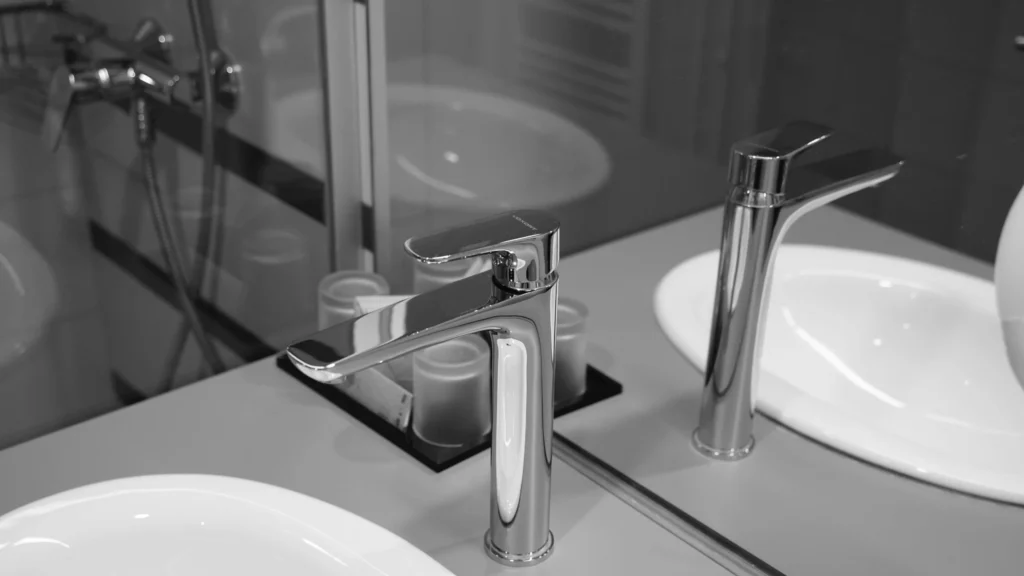
You scrub the shower glass, wipe the tap, and a day later the white, chalky marks are back. If that sounds familiar, you’re almost certainly dealing with limescale and hard water stains. They’re annoying, but they’re not a sign that your home is dirty or that anything is wrong with your water.
This guide explains what limescale is, how to remove it from taps, showers, glass, toilets and kettles using simple household products, which surfaces to protect, and how to stop it coming back.
What Are Limescale and Hard Water Stains?
Hard water is water with a lot of dissolved minerals, mainly calcium and magnesium. According to the US Geological Survey, these minerals are not toxic and do not cause harmful health effects. The problem is mostly cosmetic and practical.
When hard water dries on a surface, it leaves the minerals behind as a white, crusty or cloudy deposit. That deposit is what we call limescale or hard water stains. The USGS also notes that hard water needs more soap to lather and can leave a film on glassware and fabrics, and that minerals can build up as scale in hot-water equipment.
How hard is your water? The USGS classifies water as soft (up to 60 mg/L), moderately hard (61 to 120), hard (121 to 180) or very hard (above 180), measured as calcium carbonate. Your water supplier’s website usually publishes local figures, or you can buy a simple test kit.
What You’ll Need
Most limescale jobs only need a few basics:
- White vinegar or citric acid powder (lemon juice also works, more weakly)
- A spray bottle and a bowl or bucket
- Soft cloths or microfiber cloths
- An old toothbrush for small gaps
- Rubber gloves
- Plastic bags and rubber bands (for taps and showerheads)
The Golden Rule: Let the Acid Do the Work
Limescale is made of minerals, and mild acids such as vinegar and citric acid loosen it. The mistake many people make is scrubbing straight away. Apply the product, wait, then wipe. Aggressive scrubbing can leave tiny scratches on glass and chrome, and scratched surfaces tend to attract limescale even more.
Step-by-Step: How to Remove Limescale From Common Areas
Taps and Faucets
- Soak a cloth or paper towel in white vinegar or a citric acid solution.
- Wrap it around the tap so it stays in contact with the limescale.
- Leave it for 30 to 60 minutes for light buildup, longer for heavy deposits.
- Remove the cloth, scrub gently with a toothbrush, then rinse and dry.
Showerheads
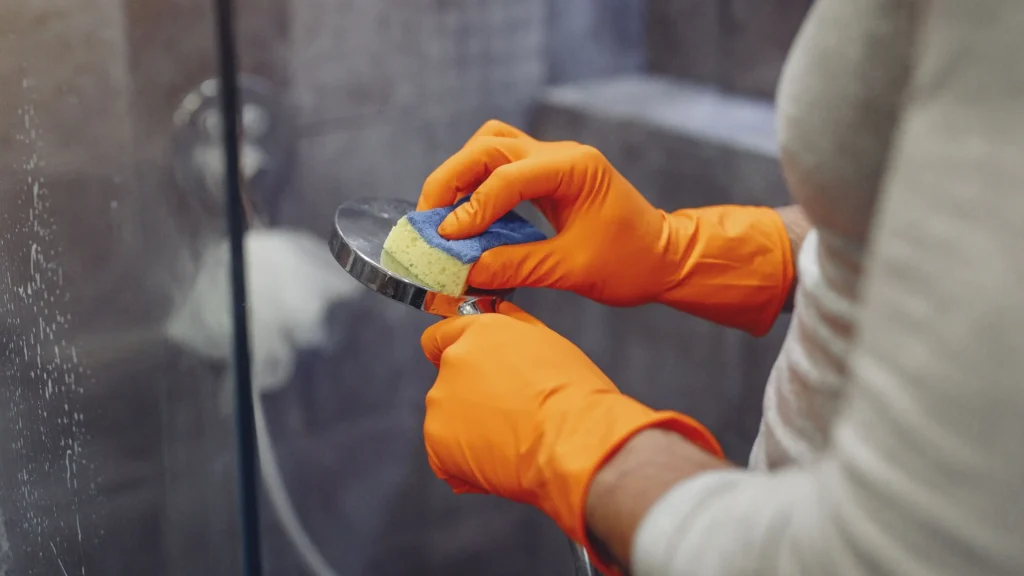
- Fill a bag with equal parts white vinegar and water, or dissolve 2 to 3 tablespoons of citric acid in warm water.
- Place the bag over the showerhead and secure it with a rubber band, or unscrew the head and soak it in a bowl.
- Leave it for 30 to 60 minutes.
- Poke any blocked holes gently with a toothpick, rinse well, and run the shower for a minute to flush it.
Shower Glass and Screens
- Spray with white vinegar or a citric acid solution and leave it for 10 to 20 minutes.
- Wipe with a soft cloth or squeegee.
- Rinse with clean water and dry to prevent new spots.
Toilet Bowl
- Lower the water level by flushing, or scoop some out.
- Add citric acid or white vinegar, making sure it touches the stained area.
- Leave it for a few hours or overnight.
- Scrub with a toilet brush and flush.
Kettle
- Fill the kettle with equal parts water and white vinegar, or with water and a spoonful or two of citric acid.
- Bring it to a boil, then switch it off and leave it for 30 minutes.
- Empty it, rinse thoroughly, then boil and discard a full kettle of fresh water once or twice so no taste remains.
Check the manufacturer’s instructions for kettles, coffee machines and dishwashers first. Some brands recommend their own descalers or advise against vinegar.
Safety: Protect Yourself and Your Surfaces
Never mix vinegar with bleach. Combining them releases chlorine gas, which is dangerous to breathe. Healthline explains the risks, and the National Capital Poison Center is among the experts who warn against it. Use one product at a time, and rinse surfaces well before using a different cleaner. The same caution applies to toilet bowl cleaners and other descalers.
Keep acids off natural stone. Marble, limestone and travertine are damaged by vinegar and citric acid, which leave dull marks known as etching. Marblelife explains that etching is permanent surface damage. Even granite’s protective sealer can be affected, as noted in this Family Handyman guide. On natural stone, use a pH-neutral stone cleaner instead.
Other precautions:
- Wear gloves and ventilate the room, especially when using undiluted vinegar.
- Test any product on a small hidden spot first.
- Don’t use acids on taps or fixtures with delicate finishes unless the manufacturer says it is safe.
- Rinse everything well afterward.
Common Mistakes to Avoid
- Scrubbing hard right away. Let the acid soften the deposit first.
- Using vinegar on marble or limestone. The damage is permanent.
- Mixing cleaners. This is the most serious mistake of all.
- Combining baking soda with vinegar and expecting extra power. They neutralize each other, so you lose the acid’s limescale-dissolving effect.
- Leaving surfaces wet. Water that dries on glass and chrome leaves new spots, so wipe or squeegee after use.
How to Prevent Limescale From Coming Back
- Wipe or squeegee after showers. Removing water before it dries is the easiest prevention.
- Do a quick weekly spray. A light vinegar spray on glass and taps (not on natural stone) stops buildup from getting thick. For a wider routine, see our guide to cleaning your house on a busy schedule.
- Descale appliances regularly. Kettles, coffee machines and dishwashers benefit from periodic descaling, following their manuals.
- Consider treating the water. Many homeowners in hard-water areas use water softeners, which swap calcium and magnesium for sodium, as the USGS notes. They are a bigger investment, so research options for your home first.
Frequently Asked Questions
Is limescale harmful to my health?
Hard water minerals are not considered toxic, according to the USGS. Limescale is mainly a cosmetic and maintenance problem, though it can clog showerheads and build up in appliances.
Is vinegar or citric acid better for limescale?
Both work in a similar way. Vinegar is easy to find, while citric acid has no strong smell and is often preferred for toilets and showerheads. Choose whichever is convenient.
Can I leave vinegar on limescale overnight?
Overnight soaking is fine in a toilet bowl, but on taps and glass 30 to 60 minutes is usually enough. Leaving acid on surfaces for long periods can damage some finishes.
Why do the stains keep returning?
If your water is hard, minerals are left behind every time water dries. Wiping surfaces dry and cleaning regularly slows the buildup, but only treating the water itself removes the cause.
What if the stains don’t come off?
Repeat the soak a few times before trying anything stronger. For very heavy buildup, use a commercial descaler and follow the label carefully, or ask a professional.
Conclusion
Removing limescale and hard water stains is mostly about patience and the right product. Use white vinegar or citric acid, give it time to work, rinse well, and keep acids away from natural stone. Never mix vinegar with bleach. To keep results lasting, dry surfaces after use, descale appliances regularly, and consider water treatment if your water is very hard.
This article is for general information. Always follow product labels and manufacturer instructions.