

You look in the mirror and see tiny dark dots across your nose, chin or forehead. It is tempting to squeeze them, scrub them or try a viral pore strip. Most people do, and most end up with irritated, redder skin and blackheads that return within days.
The good news is that blackheads respond well to a calm, consistent routine. This guide explains what blackheads really are, which ingredients help, how to build a simple routine step by step, which habits to avoid, and when it is time to see a dermatologist.
Table of Contents
What Are Blackheads (and Why Do They Form)?
Blackheads are a mild form of acne. According to the American Academy of Dermatology (AAD), they appear when a pore becomes clogged with excess oil, bacteria and dead skin cells, but stays open at the surface. The AAD also notes that the black dots are not dirt, so scrubbing them will not remove them and can make acne worse.
Why are they black?
The dark color comes from the clogged material in the open pore reacting with air, not from trapped dirt. This is why washing harder rarely helps.
Where do they show up?
The nose, chin and forehead are the most common spots because they tend to have more active oil glands. Blackheads can also appear on the back, chest and shoulders. Anyone can get them, from teenagers to adults.
What Works: Ingredients Worth Knowing
Blackheads form slowly, so the best treatments work slowly too. These are the ingredients dermatologists most often point to.
Adapalene (a retinoid)
Retinoids help unclog pores, and adapalene is the only retinoid you can buy without a prescription. It helps clear existing blackheads and prevent new ones. Expect some dryness or peeling at first, so start slowly (for example, every second or third night).
Salicylic acid
Salicylic acid exfoliates inside the pore and, according to the AAD’s guidance on adult acne, works best on whiteheads and blackheads. You will find it in cleansers, toners and leave-on treatments. Lower strengths are a good starting point if your skin is sensitive.
Benzoyl peroxide
The AAD suggests pairing a retinoid with a benzoyl peroxide wash to reduce the bacteria that contribute to breakouts. Use it carefully, because it can dry the skin and bleach towels and pillowcases.
Moisturizer and sunscreen
These are not blackhead treatments, but they make the routine possible. Retinoids and exfoliating acids can make skin dry and more sensitive to the sun, so a gentle moisturizer and daily sunscreen keep irritation under control.
A Simple Blackhead Routine, Step by Step
Keep it short. More products do not mean faster results, and too many actives at once is a common cause of irritation.
Morning
- Cleanse gently. Use a mild, fragrance-free cleanser with lukewarm water. Pat dry with a clean towel.
- Moisturize. Choose a light, non-comedogenic (not pore-clogging) moisturizer.
- Apply sunscreen. Use a broad-spectrum sunscreen every day.
Evening
- Cleanse. Remove sunscreen and makeup first if needed, then wash with a gentle cleanser. A salicylic acid cleanser can be used a few times a week.
- Apply one leave-on treatment. Use a thin, pea-sized layer of adapalene over the whole area prone to blackheads, not just on the visible spots. Start every second or third night and increase as your skin adapts.
- Moisturize. If your skin feels tight, apply moisturizer before or after the treatment.
Give it time
The AAD says you need to use the same treatment for 6 to 8 weeks to see improvement. Yale Medicine advises picking one product and giving it about two months before switching if it is not working. Consistency matters more than strength.
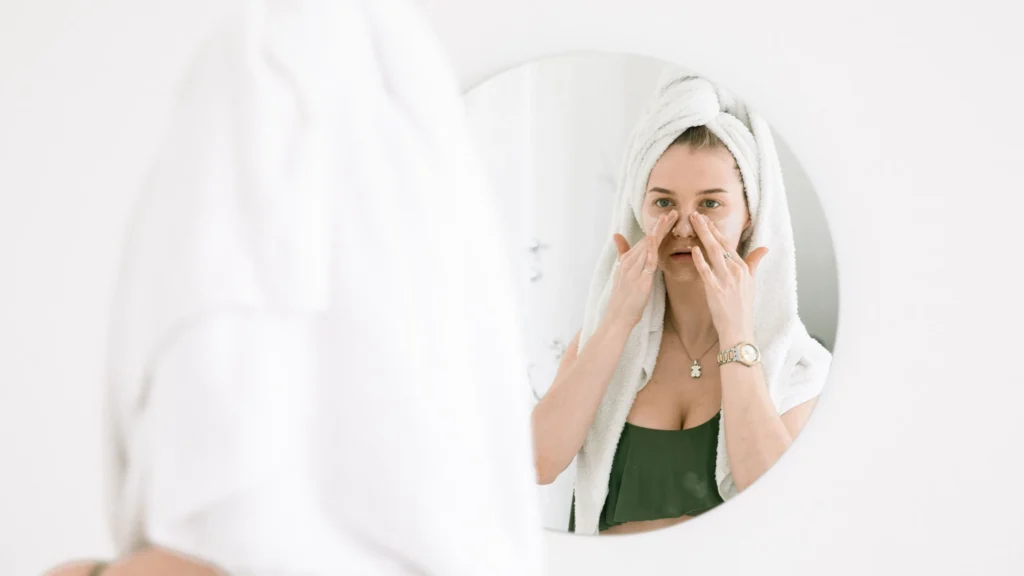
Mistakes That Make Blackheads Worse
- Squeezing or picking. Medical News Today notes that people should avoid popping, squeezing or picking blackheads, because it can irritate the skin and lead to inflammation or marks. Safe extraction is best left to a professional.
- Scrubbing hard. Blackheads are not surface dirt. Rough scrubs inflame the skin around the pore without clearing the plug.
- Using too many actives at once. Combining a retinoid, an exfoliating acid and a drying wash on the same night often causes redness and peeling. Add one product at a time.
- Quitting too soon. If you stop after two weeks, you may never see what the routine can do.
- Skipping moisturizer. Dry, irritated skin is not healthier skin. Moisturizing helps you stay consistent.
- Trying harsh kitchen remedies. Lemon juice, baking soda and toothpaste are popular online, but they are not proven treatments and can irritate the skin. Stick with ingredients that have reliable guidance behind them.
A Note on Pore Strips, Clay Masks and Extractor Tools
These products are popular, but treat them as occasional extras rather than the foundation of your routine.
- Pore strips may lift some surface material, but they do not stop pores from clogging again, and they can irritate sensitive skin.
- Clay masks can leave skin feeling less oily for a while. They do not replace a daily treatment such as adapalene or salicylic acid.
- Metal extractor tools can bruise or scar the skin when used incorrectly. If you want extraction, a dermatologist can do it with sterile tools.
When to See a Dermatologist
Book an appointment if:
- Your blackheads have not improved after 6 to 8 weeks of consistent treatment.
- You also have red, painful or deep pimples.
- Your skin is very irritated, peeling or burning from products.
- You are pregnant, breastfeeding or planning a pregnancy and are unsure which acne ingredients are safe for you.
- You get blackheads on the body that are widespread or keep returning.
According to the AAD, procedures such as comedo extraction or prescription-strength treatment can help stubborn cases. You can also read the NIH’s overview of acne for background on causes and treatment options.
Frequently Asked Questions
Can I get rid of blackheads permanently?
Not usually. Blackheads are linked to oil and dead skin cells, which keep being produced, so ongoing care is what keeps pores clear. A steady routine can reduce them a lot and keep new ones from forming.
How long does it take to see results?
Plan on 6 to 8 weeks of consistent use before judging a treatment, as the AAD advises. Skin can look a little worse or feel drier in the first few weeks as it adjusts.
Is it ever OK to squeeze a blackhead?
It is best not to. Squeezing can irritate the skin, cause inflammation and leave marks. If a blackhead really bothers you, ask a dermatologist or licensed skin professional to extract it.
Do I need to exfoliate every day?
No. Daily exfoliation with strong acids or scrubs can damage your skin barrier. If you use a retinoid, you usually do not need much additional exfoliation. Add a salicylic acid cleanser a few times a week at most if your skin tolerates it.
Can I use these products if I have sensitive skin?
Yes, but start slowly. Introduce one product at a time, use it a couple of nights a week, and increase gradually. Patch test on a small area first and stop if you notice burning, swelling or a rash.
Conclusion
Blackheads are common, harmless and treatable, but they do not respond to force. The routine that works is simple: cleanse gently, use a pore-unclogging ingredient such as adapalene or salicylic acid, moisturize, protect your skin with sunscreen, and give it six to eight weeks. Avoid squeezing and scrubbing, and ask a dermatologist for help if your skin is not improving.
This article is for general information and is not a substitute for medical advice. If you have persistent, painful or widespread acne, see a qualified healthcare professional.