
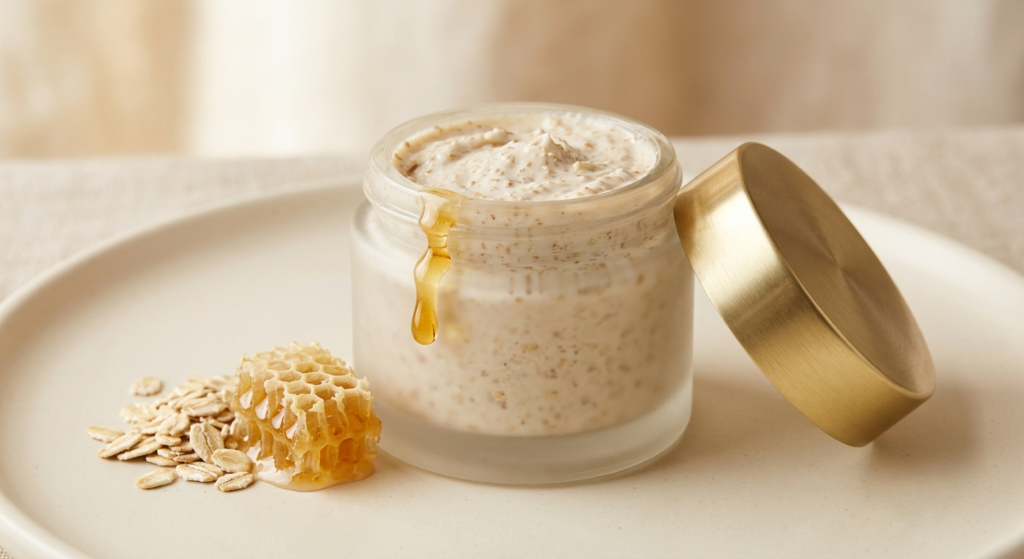
Face masks made with honey and oats are one of the simplest ways to give sensitive skin a calming treat at home. If your skin stings, flushes, or feels tight whenever you try a new product, store-bought masks can feel risky. A homemade mask with a short ingredient list is easier to control, because you know exactly what is in it.
This guide shares five beginner-friendly honey and oat face masks, a safe way to patch test them first, and the common mistakes to avoid.
Why Honey and Oats Suit Sensitive Skin
Honey is mostly sugars, and a peer-reviewed review of honey in skin care describes it as having emollient, humectant, and soothing effects in cosmetic products. A humectant helps skin hold on to water.
Oats have a long history as a skin soother. A review of colloidal oatmeal notes it has been used for centuries to ease itching and irritation from dry skin conditions. Its starches and beta-glucan are linked to its protective, water-holding effects.
Note that colloidal oatmeal in commercial products is processed to a standard. Oats you grind at home are similar but not identical, so think of these masks as a gentle, comforting treat, not a medical treatment.
Before You Start: Safety First
Natural does not mean risk-free. Dermatologists at the American Academy of Dermatology say that even products labeled “natural” can cause a skin reaction, so test before using.
How to Patch Test
- Mix a small amount of the mask.
- Apply it to a small spot, such as the inner forearm.
- Leave it on for as long as you would on your face.
- Repeat twice a day for 7 to 10 days, as the AAD recommends.
- If you see redness, itching, or swelling, wash it off and don’t use the mask.
Who Should Skip These Masks
- Anyone allergic to honey, bee products, or oats
- Anyone with open, broken, or sunburned skin
- Anyone in an active eczema or rosacea flare. Ask a doctor first, because a dermatologist can also arrange medical patch testing if your skin keeps reacting.
What You’ll Need
- Plain oats: old-fashioned or rolled oats with no flavoring or added sugar
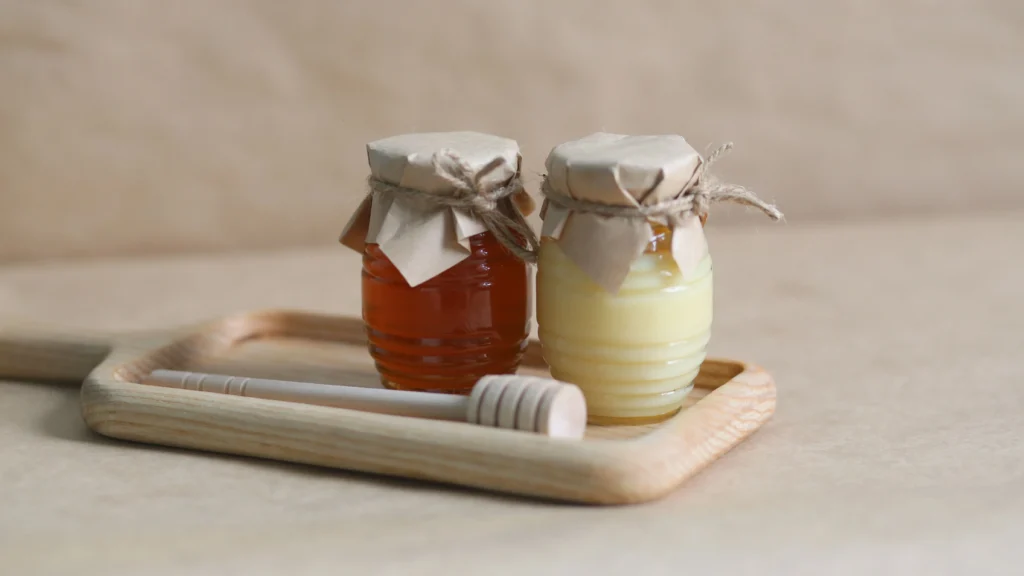
- Pure honey: check the label for 100% honey, not “honey-flavored” syrup
- A blender, coffee grinder, or mortar to grind the oats
- A clean bowl and spoon
- A soft washcloth and lukewarm water
To grind the oats: blend 2 tablespoons of oats until they form a fine powder with no chunks. Coarse oats can scratch sensitive skin.
5 Gentle Honey and Oat Face Mask Recipes
Each recipe makes one application. Mix fresh each time, because homemade masks have no preservatives and shouldn’t be stored.
1. Classic Honey and Oat Mask
Best for: first-timers and normal-to-dry sensitive skin
Prep time: 3 minutes | On skin: 10 minutes
- 1 tablespoon finely ground oats
- 1 tablespoon pure honey
- 1 to 2 teaspoons warm water
Stir into a spreadable paste. Add water a few drops at a time if it is too thick.
2. Honey, Oat, and Yogurt Mask
Best for: skin that likes a creamier texture
Prep time: 3 minutes | On skin: 10 minutes
- 1 tablespoon finely ground oats
- 1 teaspoon pure honey
- 1 tablespoon plain, unsweetened yogurt
Skip this one if you are allergic to dairy or have reacted to dairy on your skin before.
3. Honey, Oat, and Aloe Vera Mask
Best for: skin that feels warm or tight after cleansing
Prep time: 3 minutes | On skin: 10 minutes
- 1 tablespoon finely ground oats
- 1 teaspoon pure honey
- 1 tablespoon pure aloe vera gel (fragrance-free, with no added alcohol)
Check the aloe label carefully. Many aloe gels contain fragrance or alcohol, which can bother sensitive skin.
4. Honey, Oat, and Cucumber Mask
Best for: a cooling, refreshing treatment on a warm day
Prep time: 5 minutes | On skin: 10 minutes
- 1 tablespoon finely ground oats
- 1 teaspoon pure honey
- 2 tablespoons blended cucumber, strained of excess liquid
Chill the cucumber in the fridge first for an extra cooling feel.
5. Honey and Oat Milk Mask
Best for: very dry skin and anyone avoiding dairy
Prep time: 3 minutes | On skin: 10 minutes
- 1 tablespoon finely ground oats
- 1 teaspoon pure honey
- 1 tablespoon unsweetened oat milk
Use plain oat milk with no added sugar or flavors.
How to Apply Any of These Masks
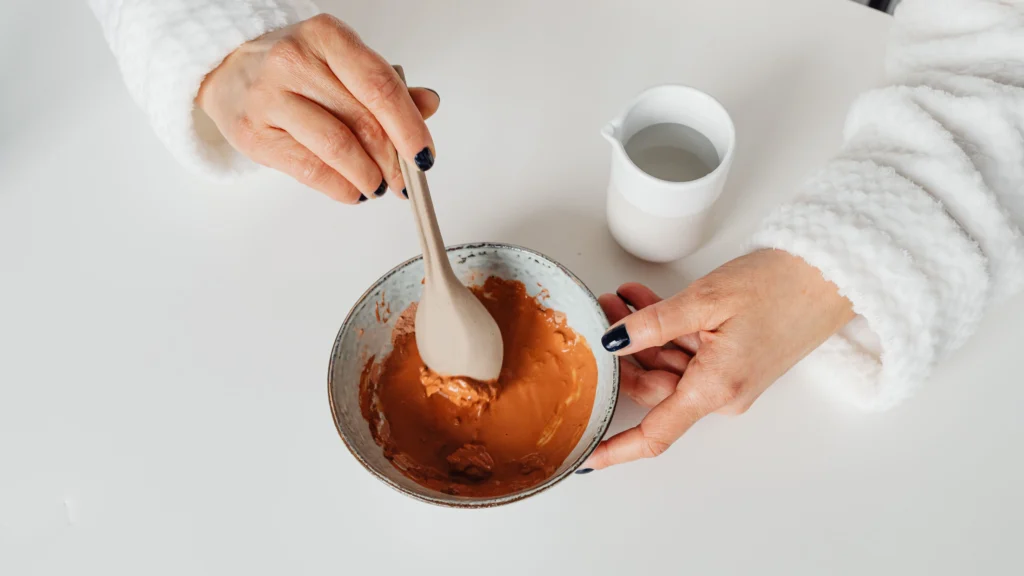
- Wash your hands and tie your hair back.
- Cleanse your face gently and pat it dry.
- Spread a thin layer over your face, keeping it away from your eyes and lips.
- Relax for 10 minutes. Don’t leave it on longer, because a drying mask can tug at the skin.
- Wet your fingertips with lukewarm water and massage in small circles to loosen the oats.
- Rinse well and pat dry with a clean towel. Don’t rub.
- Follow with your usual fragrance-free moisturizer.
How often: start with once a week. If your skin stays calm, you can try twice a week, but more is rarely better for sensitive skin.
Common Mistakes to Avoid
- Skipping the patch test. Reactions can take days to show up.
- Using hot water. Heat can worsen redness and dryness. Stick to lukewarm.
- Adding lemon juice, vinegar, or essential oils. These are common irritants and don’t belong in a sensitive-skin mask.
- Scrubbing while rinsing. The oats are there to soothe, not to exfoliate.
- Using a mask on irritated or broken skin. Wait until your skin has calmed down.
- Storing leftovers. Throw away any unused mix.
Tips for Better Results
- Grind the oats as finely as possible for a smoother mask.
- Warm the honey jar in a bowl of warm water for a few seconds if it is too thick to stir.
- Use a clean spoon each time so you don’t contaminate your honey.
- Introduce only one new product at a time, so you know the cause if your skin reacts.
Frequently Asked Questions
Can I use these masks every day?
Daily use isn’t recommended. Once or twice a week is enough, and sensitive skin often does better with less.
Can I use any type of honey?
Pure honey is best. Avoid honey blends or syrups that contain added sugar or flavoring. Manuka honey is not required for a simple mask like this.
Are honey and oat masks safe for eczema?
Honey and oats are sometimes discussed in connection with eczema, but a kitchen mask is not a treatment. If you have eczema, ask your doctor or dermatologist before trying any new mask, especially during a flare.
Can I use these masks if I’m pregnant?
Honey is generally considered safe on the skin for most adults, but some health sources advise people who are pregnant or breastfeeding to limit honey use. Check with your doctor if you are unsure.
What if my skin feels itchy or hot after the mask?
Rinse it off with cool water straight away and stop using the recipe. If the reaction is strong or doesn’t fade, contact a doctor.
Conclusion
Honey and oat masks are a low-cost, low-fuss way to give sensitive skin a calming treat. Start with the Classic Honey and Oat Mask, patch test it for a full 7 to 10 days, and keep it to once a week. Use plain ingredients and lukewarm water, and avoid known irritants. If your skin reacts or you have a skin condition, speak to a healthcare professional before trying home remedies.
This article is for general information and isn’t medical advice.